-1.png?width=175&height=47&name=anthesis-logo_living-coral%20(1)-1.png)
Download our case study here
Client’s objectives
The washing and wearing of textiles is one of the sources of microplastic fibres that has raised increased concern in recent years, and is a primary source of microplastics from the textile sector in Sweden. However, textile production takes place almost entirely outside Sweden and the EU, meaning regulations would require international commitment. But as international commitments are harder to enforce, it was easier to focus on options at an EU-level.
With this in mind, the Swedish Environmental Protection Agency (SEPA) wanted to examine the problem from a socio-economic perspective by investigating the feasibility of requiring microplastic filters in the Ecodesign regulation for washing machines.
The project
SEPA, in collaboration with the Swedish Energy Agency, assigned Anthesis to conduct a socio-economic analysis of the introduction of Ecodesign criteria to reduce microplastics from washing of textiles. The study provides a structure for analysing the performance of policy instruments concerning microplastics, and demonstrates the potential socio-economic impacts of implementing a filter requirement.
Key services delivered
- Literature review of documents about the ecodesign directive and impacts from emissions of microplastics.
- Policy instrument analysis.
- Socio-economic impact assessment.
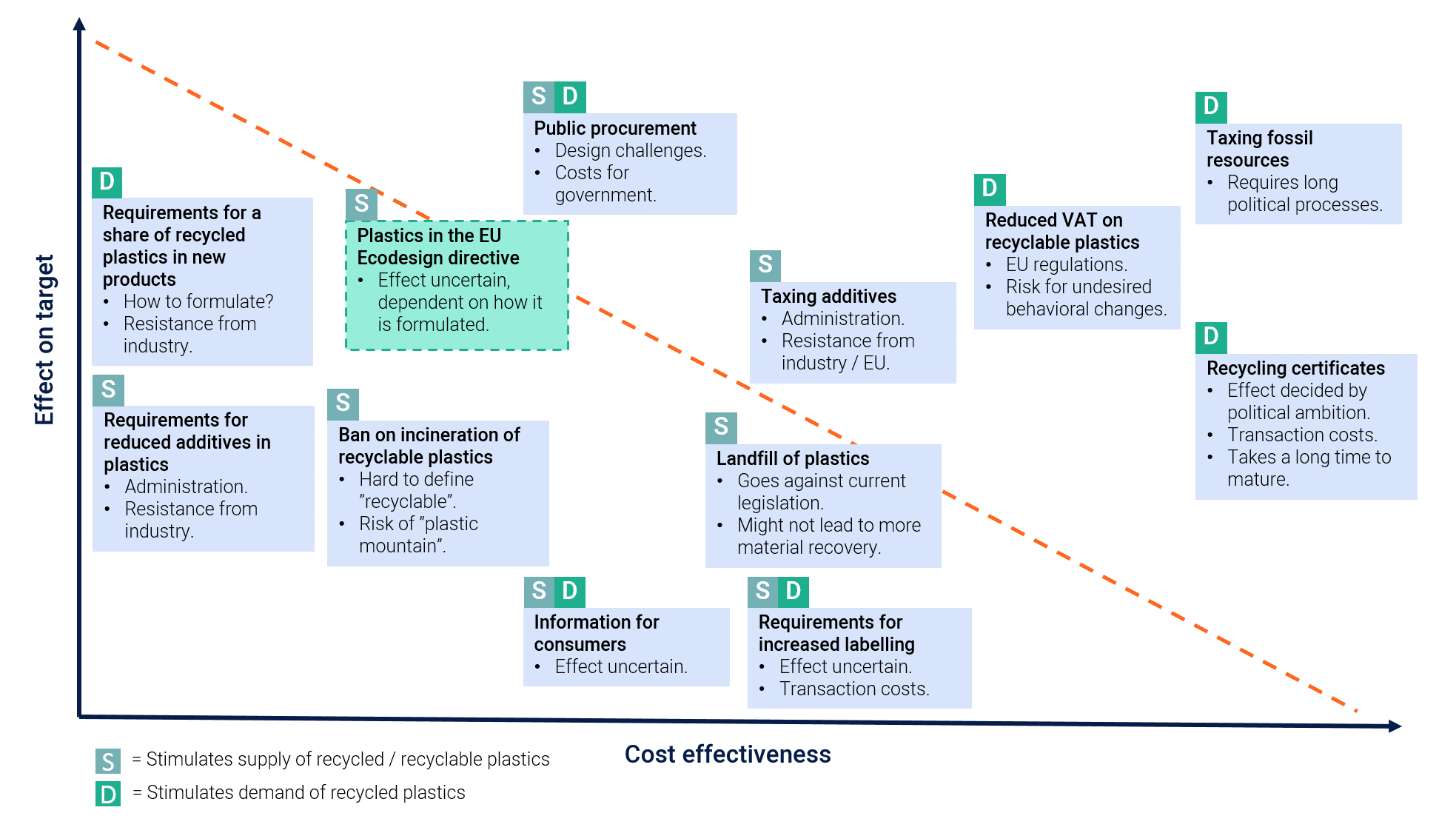
Figure 1: effect on target vs cost effectiveness of various socio-economic and policy measures for preventing or reducing plastic pollution.
Key project outputs
Our study determined that a filter criterion has potential to achieve reduced emissions from microplastics for new washing machines (the second hand market was not included). The effect will depend on how the Ecodesign requirements are specified, the performance of the filters and how consumers handle the filters.
For further information get in touch with Analyst Henrik Nordzell, or alternatively, use our fill out form below: