-1.png?width=175&height=47&name=anthesis-logo_living-coral%20(1)-1.png)
To access our report, ‘The UK wood waste to energy market – an Anthesis overview of today’s market, and projections for the future’, please complete our fill-out form here.
In this blog, Anthesis’ Associate Director Claudia Amos discusses closing the wood waste capacity gap, and the changing market dynamics associated with the growing wood waste to energy infrastructure.
Over the last 3 years a substantial number of wood waste to energy plants reached financial close, and are expected to become operational before the Renewable Obligation Certification (ROC) deadline in March 2018. The promise of these new plants has sparked discussions about closing the wood waste capacity gap in the near future, and their potential impact on wood waste pricing and wood fuel availability. While the clean wood biomass sector very much depends on imports, wood waste is a UK-led market, relying on the domestic supply of feedstock. The key factors driving wood fuel ability are as follows:
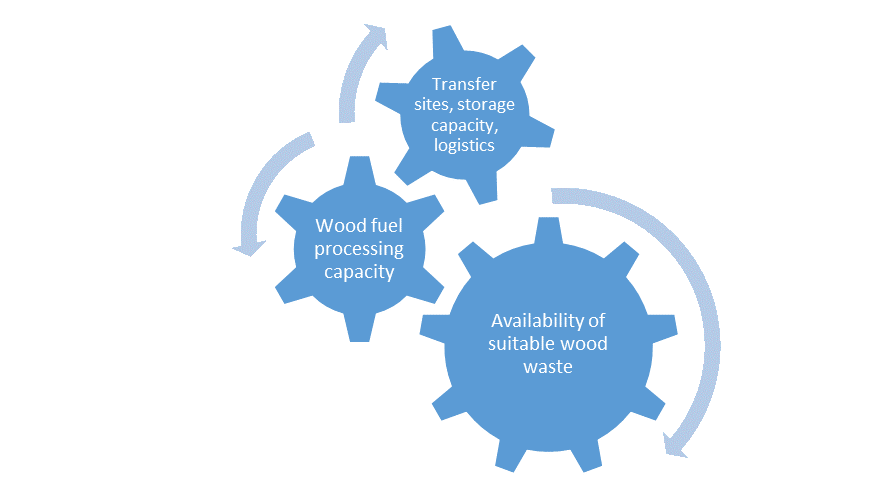
The current market structure and dynamics in the wood waste sector are shifting with this latest tranche of new plants, providing stable and long term demand for lower grade wood wastes to be processed into wood fuel. To date, the wood waste to energy sector has flourished significantly – from 0.8 Mtpa (Million tonnes per annum) in 2013, capacity has grown to an estimated 2.3 Mtpa in 2016, and is expected to increase to 4.7 Mtpa by 2020 – and there’s also an additional 0.8 Mtpa wood waste capacity with planning approval. If all of the facilities currently under construction meet their designed capacity and energy outputs, Anthesis expects the latest generation of wood EfW plants to close the capacity gap within the next 3 – 5 years. However, the capacity gap for wood waste finally closing depends on:
- The true baseline wood waste arisings, and growth in arisings that can be aggregated for processing, in particular from the commercial and industrial (C&I), and construction and demolition (C&D) sectors,
- The amount of wood waste being recycled in the panel board and animal bedding sector,
- The number of wood energy from waste (EfW) plants likely to be delivered on time to meet their ROC deadline of March 2017 or March 2018,
- The amount of wood waste actually being processed in the plants which open in 2017-2019.
The wood waste sector has been a leading force in the waste market for securing long term fuel supply agreements from merchant plants, with detailed market risk sharing mechanisms enabling wood waste processors and wood fuel users to work in partnership. This model could provide a viable approach for other merchant plants processing other wastes, such as refuse derived fuels, to counterbalance security of feedstock supply against the complexities of the waste market.
In addition to the growth of wood waste facilities, the revised Fire Prevention Guidelines published in July 2016 by the Environment Agency (EA) could significantly impact the market, too. These guidelines concern regulated sites storing combustible wastes, and will impact the wood waste supply chain from aggregation, processing, and storage, of both wood waste and prepared wood fuels. All key supply models will be affected, including on-site wood fuel processing, key anchor supply from a medium to large scale third party wood processor, as well as brokerage models aggregating wood fuels from a network of small to medium wood waste processing sites.
Although these are just guidelines, the EA will be looking for them to be adopted across all sites to ensure their health and safety and reduce the environmental impact from fires and other incidents. This makes it vital that the new guidance is considered and applied on the merits of each individual operation, and tailored on a site by site basis. These guidelines apply to:
- Existing sites which currently have either draft or approved Fire Prevention Plans (FPPs). Where plans do not meet the new guidelines, the operator will need to enter into dialogue with the regulator to agree a way forward, and negotiate a plan tailored to specific needs.
- Newly permitted sites handling or storing wood wastes will be issued with a condition requiring FPPs to be submitted for approval under the new guidelines as part of their permitting process.
To date, a large proportion of FPPs do not pass the approval stage first time around, and the process can take months to reach resolution with the EA panel. This has led to negotiations between the EA and the Wood Recycling Association (WRA) to develop templates which are expected to make the required paperwork easier. However, this doesn’t solve the issues regarding the actual requirements, which range from changes to operational site management, a need for increased site footprints, new site infrastructure for processing and the storage of wood waste. Many wood waste processors will need to lease or acquire additional sites, or change their logistics between sites to ensure they comply with the regulation, which often increases costs in the supply chain.
These requirements, in combination with delays for getting FPP’s approved, might lead to serious restrictions in wood fuel provisions, which could affect the operational and commercial success for many new EfW plants. This could mean on-site processing needs to be topped up with regular wood fuel deliveries at ‘spot market’ prices, while anchor suppliers would have to find alternative sites to be able to process the target wood fuel amounts, at potentially higher transport costs and with more logistics to consider. It would also mean that brokers, relying on a large number of small and medium wood waste processing sites, might have to create contingencies that ensure the delivery of required wood fuels to meet their contract obligations.
In many cases, this will mean increased costs of wood fuel production and transport which, in combination with reduced gate fees, is expected to put pressure on fuel supply and partnership agreements. A review of these arrangements and the actual supply chain might be prudent to ensure the security and supply of good quality wood fuel when an EfW plant becomes operational.
Conclusion
- The capacity gap is closing – how quickly this happens will depend on the amount of wood waste that can be aggregated, and delivery of the EfW plants.
- The changing dynamics, in a currently volatile wood waste sector based on the delivery of the long term supply agreements, might lead to some consolidation in the market with the large scale wood processors dominating the market.
- If existing fuel supply arrangements are successfully managed between the regulator, the wood processing and EfW industry, the wood waste to energy sector could provide an effective model for the RDF/merchant waste sector, where prepared waste derived fuels are still commanding a gate fee, and the current demand for waste processing capacity does justify payments. However, if the UK achieves 65% municipal recycling rates and EfW capacity as expected, the current cap for residual waste might close from 9 Mtpa to 3 Mtpa or less by 2030.
If you would like further information on how Anthesis could support your business operating in the wood waste and waste derived fuel (RDF, SRF) sector, contact Claudia Amos.
To access our report, ‘The UK wood waste to energy market – an Anthesis overview of today’s market, and projections for the future’, please complete our fill-out form here.