-1.png?width=175&height=47&name=anthesis-logo_living-coral%20(1)-1.png)
The next ten years will be crucial to limit global temperature rise. The IPCC’s Special Report sends a clear message - rapidly decarbonize the global economy to avoid the worst impacts of climate change, says Anthesis Director Josh Whitney.
Taking it personally
I’ll admit it, the last week has had me flirting in and out of a spiral of depression and disappointment, coming to terms with mankind’s central inability to be proactive. Somewhere deep along our genetic evolutionary journey, we skipped this seemingly critical design feature and instead prefer to take action at the very last second or often only when the writing is on the wall, or only after learning a hard lesson.
While much of the world had bought into the UNFCCC Paris Agreement in 2015 to hold warming to 2.0°C (3.8°F) by 2050, the latest Intergovernmental Panel on Climate Change’s 1.5°C Special Report, commissioned and endorsed by world governments, including the U.S., now finds that to hold global temperature rise below 1.5°C will require “rapid, far-reaching and unprecedented changes in all aspects of society”. Previously, this level seemed politically feasible, although it would still lead to vast damage, including the death of all coral, even more deadly storms and heat, and rising oceans covering low-lying island nations and major coastal areas.
The good news against this backdrop is that while the world has already warmed 1.0°C (1.8°F) since pre-industrial times, holding the world to 1.5°C (2.7°F) is still technically possible. The report finds that the impacts of climate change are in fact already occurring and will be much worse at 2°C than previously projected. Thus 2°C is no longer a safe goal to avoid the worst impacts of climate change. These impacts are being felt in companies and supply chains across the globe and, as the report highlights, the difference in their severity between the 1.5°C and 2°C temperature goals will be stark.
An urgent call to climate action
If 1.5°C is the new 2°C, then how do we get there?
The crux here is that it requires us all to accelerate our efforts in less time, cutting emissions by 45% from 2010 levels by 2030, and reach net zero by 2050 – globally.
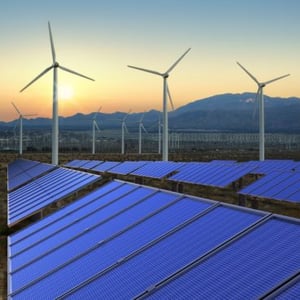 This is massively transformative from the previously stated reduction requirements. For the energy sector alone as an example, this translates to getting renewables to 85% of global electricity capacity by the same year (we hit 21% globally in 2015), while the use of coal will have to be nearly eliminated.
This is the new, new science, backed by 6,000 scientific papers, 91 authors and editors from 40 countries who put pen to paper to test whether the Paris commitments 2°C target setting would get us there. The message is now clear, it won’t, and we’ve got 10 years to pivot and avoid the worst impacts of climate change – not just for our children and grandchildren, not just for those in developing nations, not just for the flora and fauna of this incredible planet, but for me and you.
The private sector holds the key for climate action
Even with nearly every country in the world committed to Paris, it’s the nearly 500 global companies committed to setting science-based targets (with over 140 having set them) that must play the leading role in facilitating these transitions. These corporations are signaling the emergence of a ‘new normal’ in the way business are developing their strategies for the future, but we need all companies to follow in these leaders’ path and align their business strategies with what the science says is needed to avoid the worst impacts of climate change. Regulation and policy (in)action aside, it’s up to world’s economies to lead the way.
We’ve been working with companies across nearly every sector on initiatives to achieve sustainability outcomes like energy efficiency, purchasing renewables, setting science-based targets, and engaging employees – but companies also recognize that these initiatives are just good business. However, to champion efforts that align with this new science, we need much, much more.
We need to get uncomfortable and push boundaries and the expectations of what we currently think is possible, because ironically enough if we don’t, our boundaries will get pushed and life on this planet will become exceedingly uncomfortable. What might that look like? Here are just a few ways companies can leverage their scale and impact to accelerate climate action:
- Use their products, services and brand to engage the masses.
- Let’s get political.
- Invest in the short-term tactical and the big picture meta.
Riffing off the old mantra “think globally, act locally”, companies should balance their investments and focus both on those projects that they can tangibly effect through innovation, but also on more systemic issues.
For example, while we’re successfully solving for renewables, scope 1 GHG emissions from stationary fuel combustion remains the next frontier we have yet to tackle, where doing so can directly improve a company’s efficiency while leading to cost savings. Meanwhile, we are seeing a return to focus on the systemic global systems of our planet and a recognition of the significant role they play to limiting global emissions, in some case more so than any one technology could ever achieve.
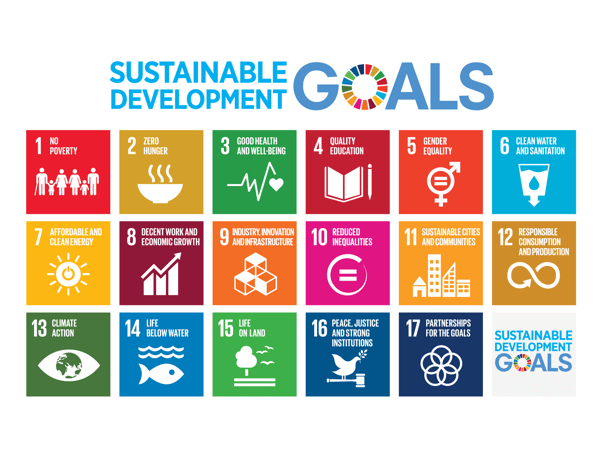
Companies should invest equally in protecting and innovating around our oceans, forests, fresh water, and food systems. The Sustainable Development Goals are prime roadmaps for where and how to focus.
- Incentivize climate action.
- Support STEM and unequivocally support the truth.
- Be willing to competitively collaborate and fail.
Will you be putting actions into place?
I won’t for a minute imply that any of these actions will be easy to push forward, even implementing standard practices are still a challenge in some corporate environments today. They will require massive efforts, late nights and working weekends; we’ll argue but hopefully compromise with our co-workers, peers, in-laws and friends, but this is the challenge of our lifetime and this is our call to action.
Personally, when I started my career 15+ years ago, this story was still very much unfolding, it was still a theoretical one, affecting far-away places with polar bears in the relatively distant future, heck by now we should all be on hover boards, right? But that story is now at our doorstep, we’re living it right now, the climate is changing and human lives, the quality thereof, and even survival of life as we know it, is at stake. I know we will be tackling the challenge head-on. Will you join us?
About the author

Josh Whitney is a Director in our North American division. He is the Anthesis lead for the technical sector and science-based targets.